

Water Storage is important and can also be said that it is inevitable in residential complexes, offices, factories and other institutions. The water storage system can be controlled so that there is enough water to maintain things like daily chores, cleanliness, sanitation and use of water as directed by the organizations. An Overhead Water Tank can be said to be the best option.
offers a range of water storage options based on steel for your specific project needs. Additional factors to consider are the volume and structure of storage, site requirements and quality of the material and its maintenance. A proper installation will give the landowner water independence.
Understanding Overhead Water Tank Systems
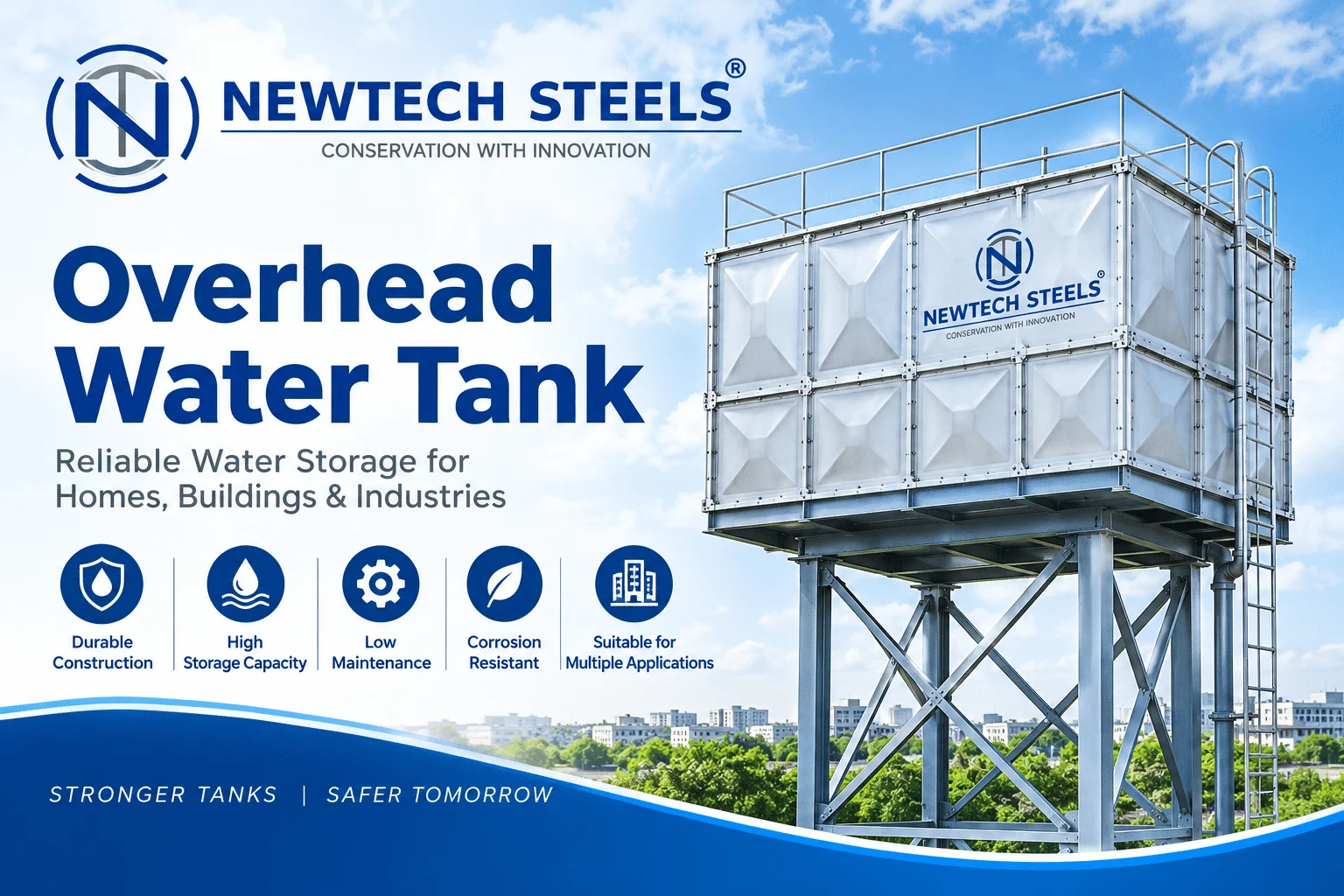
An Overhead Water Tank is positioned above the ground on a designated structure, platform, building or roof. Water is pumped and stored in this tank, often waiting for someone to turn on a tap. The use of gravity then shifts the water pressure in the plumbing system of the building (if raised above the outlet).
The Overhead Water Tank can be utilized for housing complexity, hotels, hospitals, instructive foundations, stores, plants, manufacturing plants and business structures.
The limit of the tank relies on the quantity of clients, overall utilization, top interest, and the accessibility of a subsequent water supply.Steel tanks are options for developments which require a standard built option with varying storage capacities. These should be designed, specified and constructed to the project’s particular use, environmental parameters, standards and specification and structural factors.
Long-Term Storage Benefits of Overhead Water Tank Systems
A well-planned elevated storage system offers several practical benefits. Its long-term performance depends on the quality of materials, correct installation, appropriate sizing, and regular maintenance.
1. Consistent Water Availability
The Overhead Water Tank provides a reserve of water for use when the water source flow rate is temporarily discontinued. If you own or operate an apartment building, hotel, office building or industrial plant, that work cannot be completed without a water supply.A suitably sized Overhead Water Tank allows for normal use as well as times when there is a higher demand. The amount of reserve, though, is limited by the size of the tank, usage, and how often it’s topped up.
2. Gravity-Based Water Distribution
Water can flow to other outlets because of head pressure if the tank is installed in an elevated position, connected to outlets and the system is designed correctly. Pumps can be used to top up or draw Overhead Water Tank from the tanks, to enable distribution.The height of the tank, pipe sizes, outlet configurations and building design all impact upon available water pressure. Good design helps to ensure that the storage system will deliver the property’s demand.
3. Efficient Use of Available Space
An elevated installation can save space at ground level for other uses, equipment, parking or operations. This could be useful at a commercial or industrial site where usable land is at a premium.
Prior to installation, the existing rooftop or support structure should be checked for suitability and strength to support the Overhead Water Tank along with its operation loads. Also access for inspection, cleaning and maintenance should be taken into account during planning.
4. Support for Different Applications
This type of Overhead Water Tank provides any size of water storage. The water storage may be for residential building purposes or for a commercial building that uses water for water problems, sanitation, and cleaning.Factories will need to obtain storage for all general utilities and other processes according to the quality and application of water. The Tank material, internal protection and construction specification must be compatible with the application.
5. Long-Term Operational Value
Service life with a properly specified Overhead Water Tank installation and maintenance can be expected to be indefinite. The durability of tank materials, the quality of the coating system, structural design and outside exposure can determine the service life.When looking at long-term value, consider the cost, installation, inspection, maintenance and its overall operational cost. Opting for a tank just on its initial costs does not take into consideration other influences on the overall tank life.
Important Factors for Selecting an Overhead Water Tank
Choosing a suitable tank requires more than estimating the amount of water needed. Project conditions and operating requirements should guide the selection process.
Storage Capacity
Capacity should be based on the number of users, daily consumption, peak demand, and the duration of any interruption of the incoming supply. Too small a tank means it will need topping up more frequently; too large a tank will cost more to install and build.
Material and Construction Quality
It is important to specify the Overhead Water Tank material, based on how the tank will be used and the environment it will be used in. For steel storage systems, there should be adequate corrosion protection, matching fabrication and performance specifications. The quality of the joints, connections and supports will also matter.
Structural Safety
Due to the weight of Overhead Water Tank the platform or building structure must be capable of supporting the total operational load. When designing the structure, take into consideration the tank weight, water contents, way of support, wind load and any other factors of the site.
Installation and Accessibility
Safe working access space shall be provided for inspection, cleaning and maintenance at the installation site. Pipe connections, overflow arrangements, access and outlets shall be provided, planned and located to facilitate operation and maintenance.
Comparison of Key Tank Selection Considerations
| Selection factor | Why it matters | Recommended approach |
| Storage capacity | Determines available water reserve | Estimate daily demand and peak usage |
| Material quality | Influences durability and suitability | Select materials for the intended application |
| Structural support | Maintains installation safety | Obtain an appropriate structural assessment |
| Corrosion protection | Helps protect exposed surfaces | Check coating specifications and maintenance needs |
| Accessibility | Supports inspection and cleaning | Provide safe access for routine maintenance |
| Installation planning | Affects overall system performance | Coordinate the tank, supports, pipes, and outlets |
Installation Practices That Support Long-Term Performance
Right installation is critical for a reliable Overhead Water Tank. Supports should be level, stable, and capable of supporting the entire operating weight of the tank. Construction should be carried out in accordance with the manufacturer’s specifications and engineering standards.An Overhead Water Tank must be provided with adequate inlet and outlet fittings, overflows, drainage points where necessary, and inspection hatches. All fittings shall be properly installed to minimize the probability of leakage.
The inlet and outlet arrangement shall also minimize the possibility of foreign matter entering the Overhead Water Tank.Environmental exposure is a concern, particularly if the tank is to be installed outside. Surface protection, even if only to inspect exposed components and perform maintenance when needed, can be a factor in slowing the deterioration process. Installation should be performed by qualified individuals with an understanding of project structuring and plumbing.
Maintenance Practices for Reliable Water Storage
Regular maintenance can keep your tank and the water quality in good condition. Perform inspections at appropriate intervals and more frequently if unusual operating conditions are noticed or damage is observed.
Important maintenance activities include:
Visually checking the tank body, joints, fittings and visible connections for leaks.
Inspection of protective coatings and repairing of the corrosion indications in support of the manufacturer’s instructions.Cleaning the Overhead Water Tank periodically to avoid build-up of sediments and to keep the water hygienic.Check for blocked, broken or missing systems such as Inlet, outlet, overflow and drainage etc.Ensuring that access points, covers and openings are secure and protected as necessary.
Keeping records of inspection, cleaning, repairs and other service.They will assist in early diagnosis of possible problems and a reliable operation. Follow the manufacturer’s recommendations for maintenance procedures based on the type of tank material, the type of water stored, and the work environment.
Overhead Water Tank Solutions
Newtech Steels Industries Private Limited is a semi-finished steel storage product for projects that have varying storage capacity and various installation types. Consider these factors when choosing the proper layout: application, site conditions, space availability, exposure to elements, structure, and water requirements.For Projects Overhead Water Tank. These factors contribute to determining appropriate specifications for an before engineering, manufacture and installation.
Material, structural design, manufacture quality, protective treatment and installation should all be set up to support consistent behaviour.For industrial, commercial and institutional jobs where operating conditions are different, this is also crucial. Overhead Water Tank needs in the existing business and the expected future demand must be taken into account.Choosing the right storage solution helps manage water use effectively with a cost-effective, robust, accessible, and easy-to-maintain tank.
Conclusion
A high level Overhead Water Tank system will provide a water supply, gravity feed and maximum use of the ground area. The lifespan of a high level water storage tank will be dependent on its correct sizing, construction material, safe structure and the correct installation and maintenance.The water demand and conditions of the premises must be considered when selecting a water tank. supplies steel-based storage options for a range of project needs with a focus on functional design and long-lasting build. A thoughtful choice of a water tank can ensure consistent operation.
Frequently Asked Questions
1. What is an overhead water storage system used for?
It accumulates water at a high elevation from which it is supplied to the homes, commercial, institutional and industrial facilities. The Overhead Water Tank is dispersed through connected outlets and is facilitated by gravity as per the layout of the system.
2. How should the capacity of an overhead tank be selected?
Capacity should be determined taking into account the number of users, daily consumption, load peak, supply available, and power interruptions. Additionally, the structure to support and the area for the installation should also be considered.
3. Which factors affect the service life of an overhead tank?
Service life can be affected by material quality, protective barriers, structural configuration, installation technique, environment and maintenance.
4. How frequently should an overhead tank be cleaned?
The frequency of cleaning shall be depending on the use, the water quality of the stored water, the locality requirements and the observation made during inspection. The drinking water tanks shall be cleaned as per the norms of quality and maintenance.
5. Is structural assessment necessary before installation?
Yes. The supporting structure should be checked to ensure it is capable of supporting the load of the tank, the water stored and all other relevant loads.